
Nolvadex (Tamoxifen) and Clomid (Clomiphene) are the cornerstones of Post Cycle Therapy (PCT) in the UK bodybuilding community. While both are classified as Selective Estrogen Receptor Modulators (SERMs), they function differently to achieve the same goal: restoring your body’s natural hormone production.
Choosing the right PCT protocol is the difference between keeping your gains and facing a hormonal crash. This guide breaks down the science, side effects, and recovery profiles of Clomid for men and Nolvadex PCT.
Key Takeaways
- Hormonal Recovery Support: Both Nolvadex (tamoxifen citrate) and Clomid (clomiphene citrate) are SERMs that block oestrogen receptors in the hypothalamus, stimulating the release of LH and FSH to restart natural testosterone production.
- Personalised PCT Selection: The right post-cycle therapy medication depends on individual recovery goals, hormone levels, cycle length, and the compounds used.
- Health and Safety Considerations: Proper dosage, medical supervision, and awareness of potential side effects are essential for a safer and more effective recovery process.
Finishing a steroid cycle is a critical phase for any fitness enthusiast. This transition period, from being on-cycle to off-cycle, largely determines how much of your hard-earned muscle you actually keep. Without proper intervention, your body’s suppressed testosterone production may take months to recover on its own, leading to muscle loss, fatigue, low mood, and other hormonal symptoms.
This recovery phase is supported by Post Cycle Therapy (PCT) – a structured approach designed to restore your body’s natural hormone levels as efficiently as possible. Among PCT tools, two medications stand out: Nolvadex and Clomid. Understanding the differences between them can help you and your doctor make the most informed decision for your recovery.
What is Nolvadex?
Nolvadex is a primary PCT medication used by individuals planning to go off steroids. The active ingredient is Tamoxifen, which is highly effective at managing the after-effects of performance-enhancing drugs.
As a SERM, Nolvadex does not block the production of oestrogen; instead, it competitively binds to oestrogen receptors in specific tissues, particularly in the hypothalamus, pituitary gland, and breast tissue. By occupying these receptors, it prevents oestrogen from binding and triggering its effects, while also reducing oestrogen’s inhibitory feedback on the hypothalamic-pituitary-gonadal (HPG) axis. This restores the signalling pathway needed for natural testosterone production to resume.
Nolvadex for men is particularly valued for its ability to prevent and reverse early-stage gynaecomastia (the growth of breast tissue in men), a common side effect of anabolic steroid use.
What Are the Uses of Nolvadex?
Nolvadex can be used in the following ways:
Post Cycle Therapy
Nolvadex PCT is a common first choice for individuals transitioning off a steroid cycle. By blocking oestrogen receptors in the hypothalamus and pituitary, it stimulates the release of LH (Luteinising Hormone) and FSH (Follicle-Stimulating Hormone), encouraging the testes to resume testosterone production.
Osteoporosis Risk Reduction
Due to its tissue-selective SERM activity, Nolvadex can act like oestrogen in bone tissue, helping maintain bone mineral density and lowering the risk of osteoporosis — particularly relevant for long-term users.
Breast Cancer Treatment
Nolvadex is an established medical treatment for oestrogen receptor-positive breast cancer in both pre- and post-menopausal women, and also for male breast cancer. It works by blocking oestrogen’s stimulatory effect on cancer cells in breast tissue.
Gynaecomastia Prevention and Management
One of the most valued uses of Nolvadex for men is its ability to block oestrogen receptors in breast tissue. This makes it effective at reducing the risk of gynaecomastia during or after a steroid cycle, and it may help reverse early-stage tissue growth.
How Is Nolvadex Taken?
Nolvadex is an oral medication, available in 10 mg and 20 mg tablets, taken once daily with water. It has a long half-life of approximately 5–7 days, making once-daily dosing sufficient to maintain stable blood levels throughout your PCT.
Typical Nolvadex PCT dosage protocol (always follow medical advice):
- Week 1–2: 40 mg per day
- Week 3–4: 20 mg per day
- Week 5–6 (if required): 10 mg per day
Dosages must always be determined by a licensed, experienced doctor based on your medical history, the nature of your steroid cycle, and your individual hormonal profile. Never self-prescribe or adjust dosages without professional guidance.
The correct dosages for this PCT vary among individuals. A licensed and experienced doctor must prescribe the dosages based on one’s health condition, recent steroid cycle, and other factors.
What are the Potential Side Effects of Nolvadex?
Some of the potential side effects of Nolvadex for men and women include:
In Both Men and Women
- Hot flushes
- Night sweats
- Weight gain
- Fluid retention (oedema)
- Nausea
- Skin rash
- Fatigue
- Headaches
- Leg swelling
- Blood clots and deep vein thrombosis (DVT)
- Stroke
- Cataracts and other eye problems
In Men
- Erectile dysfunction
In Women
- Vaginal dryness
- Irregular or loss of menstrual periods
- Vaginal discharge
- Endometrial (uterine) cancer
Side effects are common with all medications, and Nolvadex is no exception. Most side effects subside with time, but some might persist and must be reported to the doctor. A doctor will be able to assess the risks and help in recovery. Taking quick action in times of emergency will help in lowering risk.
What is Clomid?
Clomid is the brand name for clomiphene citrate, another first-generation SERM with a long history of clinical use. Originally developed in the 1960s to stimulate ovulation in women with fertility issues, it is now widely used off-label in both men and women as a PCT medication.
Like Nolvadex, Clomid blocks oestrogen receptors in the hypothalamus. This removes oestrogen’s suppressive feedback on the HPG axis, prompting the pituitary gland to release more GnRH (Gonadotropin-Releasing Hormone), which in turn stimulates LH and FSH production. The result is a signal to the testes to produce testosterone.
Clomid for men is particularly effective at restoring testosterone when levels have been severely suppressed, as it acts directly on the body’s hormonal signalling system. Clomid for women may assist with stimulating ovulation and supporting hormonal balance, though its use in female PCT is less common and requires careful medical oversight.
The use of Clomid for men and women is essential for restoring natural testosterone production, suppressed during a steroid cycle. It effectively blocks oestrogen receptors to jump-start the body’s internal hormone factory.
Using clomid tablets is a standard part of recovery for those looking to maintain muscle mass and improve recovery times.
What are the Uses of Clomid?
Clomid is used for the following reasons:
Stimulating Natural Testosterone Production
The primary post-cycle benefit of Clomid is the restoration of natural testosterone production. By stimulating LH and FSH release, it signals the testes to resume their function, making it particularly effective for those whose testosterone has been heavily suppressed during a long or intense cycle.
Promoting Faster Post-Cycle Recovery
Clomid tablets are used to reduce the time the body takes to return to its normal physiological hormonal state after anabolic steroid use.
Preserving Muscle Mass During Recovery
During the post-cycle transition period, maintaining testosterone levels, even partially, helps preserve the muscle mass built during a cycle. Clomid supports this by encouraging endogenous testosterone production rather than leaving the body without support.
Managing Oestrogen and Physical Health
By blocking oestrogen receptors in the hypothalamus, Clomid helps prevent oestrogen from suppressing testosterone signals — supporting hormonal rebalance during recovery.
How Is Clomid Taken?
When considering how Clomid is taken, it is essential to understand that dosages should always be prescribed by a licensed doctor, tailored to your individual health condition, cycle history, age, and hormonal profile.
Clomid tablets should be swallowed whole with water and never crushed or chewed. Consistency is vital; taking Clomid UK doses at the same time each day helps maintain stable hormone levels throughout the PCT window.
Typical Clomid PCT dosage protocol (always follow medical advice):
- Week 1–2: 50 mg per day
- Week 3–4: 25 mg per day
The PCT medication comes in tablet form. It should be swallowed with water and never crushed or chewed. Consistency is vital for Clomid UK users to ensure the steroid does not become harmful to their health.
What are the Potential Side Effects of Clomid?
Potential side effects of Clomid for women and men include:
In Both Men and Women
- Mood swings
- Body pain
- Mild headache
- Hot flushes
- Eye problems
- Vomiting
- Diarrhoea
- Rash and itching
- Oedema
- Liver disease
- Thyroid gland disease
In Men
- Testicular tumour
- Breast pain
In Women
- Pelvic pain
- Menstrual problems
- Ovarian cysts
Every medication has potential risks. While some Clomid side effects subside within a few days without any professional assistance, others require medical attention from an experienced doctor. Contact your doctor right away in case of an emergency.
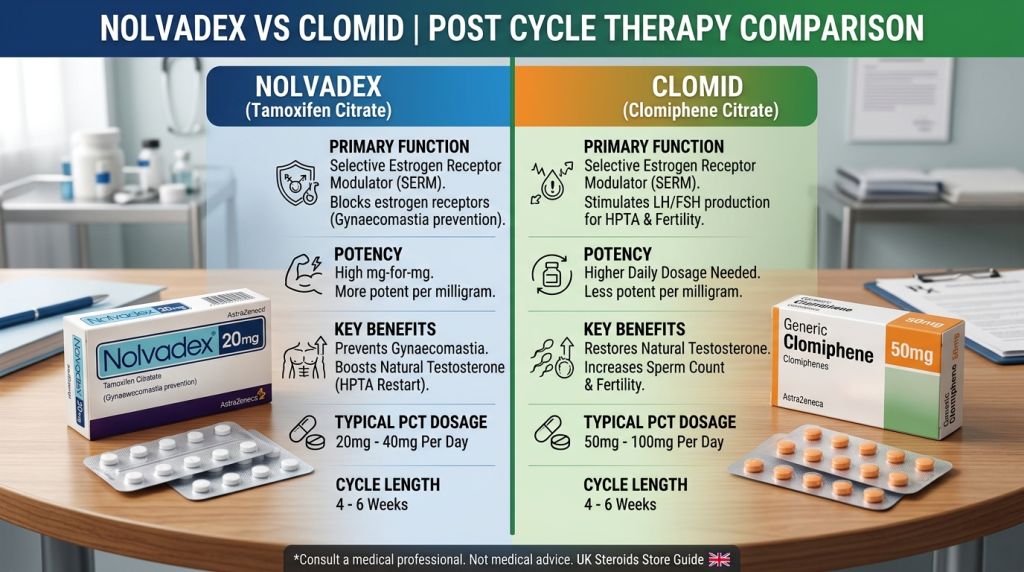
Nolvadex vs Clomid: Side-by-Side Comparison
| Feature | Nolvadex (Tamoxifen) | Clomid (Clomiphene) |
|---|---|---|
| Drug class | SERM | SERM |
| Primary mechanism | Blocks oestrogen receptors in breast tissue and hypothalamus | Blocks oestrogen receptors in the hypothalamus, stimulates GnRH/LH/FSH |
| Strength (mg for mg) | Stronger at the receptor level | Requires higher doses for equivalent effect |
| Best for | Gyno prevention, oestrogen management, lighter cycles | Testosterone restoration, heavier suppression cycles |
| Half-life | 5–7 days | 5 days |
| Tablet strengths | 10 mg, 20 mg | 50 mg |
| Mood side effects | Generally milder | More commonly reported |
| Visual side effects | Possible | More common at high doses |
| Used for women? | Yes (breast cancer, fertility) | Yes (ovulation induction) |
| Can it be combined? | Yes — often stacked with Clomid | Yes — often stacked with Nolvadex |
Can Nolvadex and Clomid Be Used Together?
Yes. Many experienced PCT users and clinicians use a combination of Nolvadex and Clomid together for enhanced recovery, particularly after heavier or longer steroid cycles. Because they target the same receptors through slightly different pathways, combining them may provide a more comprehensive hormonal recovery response. A typical stacked protocol might involve both medications during the first two weeks, with doses tapered thereafter. This approach should only be undertaken with medical supervision.
Where Does HCG Fit In?
HCG (Human Chorionic Gonadotropin) is sometimes used alongside SERMs like Nolvadex and Clomid in PCT protocols, particularly after long or heavily suppressive cycles. HCG mimics LH and directly stimulates the testes to produce testosterone, helping to “prime” the system before SERM-based PCT begins. Its use is typically reserved for more advanced cases and must always be overseen by a licensed medical professional.
Dietary Instructions for a Successful PCT
You must focus on a nutritious diet when using Nolvadex or Clomid tablets. The diet should be rich in natural protein like eggs and meats, while taking these medications. Your diet must include dairy products, bananas, and berries, which will help support the body’s recovery.
Recommended foods:
- High-quality natural proteins: eggs, lean meats, and fish
- Dairy products
- Fruits rich in antioxidants: bananas, berries, and citrus
- Zinc-rich foods (important for testosterone production): pumpkin seeds, red meat, and legumes
- Cruciferous vegetables: broccoli, cauliflower, and kale to support oestrogen metabolism
Foods to avoid:
- Alcohol can impair liver function and interfere with hormonal recovery
- High-sugar and processed foods
- Excessive saturated fats
- Caffeinated drinks in excess
- Whey protein supplements (may interfere with oestrogen metabolism in certain individuals)
However, you must avoid foods containing whey protein, such as certain smoothies or protein bars. It is also recommended to stay away from saturated fats, alcohol, high-sugar foods, and caffeinated drinks.
Which PCT Will Be Right for Your Cycle?
Both Nolvadex and Clomid are effective PCT medications. The right choice depends entirely on your individual goals, health condition, and the nature of your steroid cycle.
Choose Nolvadex if you are primarily concerned with managing oestrogen-related side effects. It is a good option for those who want a straightforward aromatase blocker that also helps with osteoporosis protection and breast cancer risk reduction.
Choose Clomid if your priority is restoring natural testosterone production as quickly as possible. It works more directly on the body’s hormonal signalling system, making it a strong option for those whose natural testosterone levels have been significantly suppressed during a cycle.
Ultimately, no PCT medication should be chosen without consulting a licensed and experienced doctor. Your health history, cycle length, and individual hormonal profile all play a role in determining which medication or combination will deliver the safest and most effective recovery.
In Summary
Choosing between Nolvadex and Clomid is a decision that should not be taken lightly. Although both medications serve the same purpose, the choice between them should be guided by a licensed and experienced doctor. So, ensure you are fully educated about the PCT medications and their specifications and navigate the journey with a professional’s help.
Ready to Start Your PCT the Right Way?
Ready to start your PCT the right way? Whether you are considering Nolvadex or Clomid, explore our collection at UK Steroids Store for genuine PCT medications. Always prioritise your health and work with a medical professional throughout your recovery.
Frequently Asked Questions
1. When Should I Start My PCT After My Last Dose?
Timing depends on the steroid compounds you were using. For short-ester steroids (e.g., testosterone propionate), PCT can typically begin 3–5 days after your last injection. For long-ester steroids (e.g., testosterone enanthate or cypionate), it is generally advisable to wait 10–14 days to allow the compound to clear your system. Starting too early or too late can compromise recovery. Always consult a doctor to establish the correct timing for your specific cycle.
2. How Do I Know If My PCT Was Successful?
The most reliable method is blood testing. A doctor can assess your LH, FSH, and total testosterone levels several weeks after completing PCT to confirm that natural production has returned to your personal baseline. Subjective signs such as improved energy, libido, and mood are encouraging indicators but are not a substitute for laboratory confirmation.
3. How Long Does a Typical PCT Cycle Last?
Most PCT protocols run for 4–6 weeks. The exact duration depends on the length and intensity of your steroid cycle, the compounds used, and how quickly your hormone levels recover. Longer or more suppressive cycles typically require longer PCT periods. Always follow your doctor’s recommendations on duration.
4. Can I Stop Taking My PCT Medication If I Feel Back to Normal?
No. You should not discontinue PCT medication without a detailed discussion with your doctor, even if you feel recovered. Stopping too early can prevent your natural hormone production from fully stabilising, potentially leading to a secondary crash. Feeling well is a good sign, but blood tests are the only way to confirm full recovery.
5. Where Should I Store My PCT Medications?
Store all PCT medications in their original packaging in a cool, dry location away from direct sunlight and humidity. Avoid bathrooms and kitchens, where moisture is common. Keep all medications out of reach of children and pets, and always check expiry dates before use. Never use expired medication.
6. What Are the Signs That My Natural Testosterone Has Not Recovered After PCT?
Persistent symptoms such as prolonged fatigue, significant loss of muscle mass, low libido, erectile dysfunction, depression, or mood disturbances several weeks after completing PCT may indicate that natural testosterone production has not fully recovered. In such cases, it is important to seek blood testing and medical advice as soon as possible rather than waiting or self-medicating.
7. What is the Difference Between a SERM and an Aromatase Inhibitor?
This is one of the most common points of confusion in PCT. A SERM (like Nolvadex or Clomid) blocks oestrogen receptors in specific tissues; it does not reduce the amount of oestrogen in the body. An aromatase inhibitor (AI), such as anastrozole (Arimidex) or exemestane (Aromasin), works differently by preventing the conversion of androgens into oestrogen, thereby reducing total circulating oestrogen levels. They serve different purposes and should not be confused with one another.
8. Can I stack Nolvadex and Clomid together?
Yes, many advanced bodybuilders use a combination of both to cover all bases, using Nolvadex for estrogen receptor blocking and Clomid for a more aggressive HPTA restart.