uksteroidsstore.com is the only website we operate. Many try to imitate us. stay alert and dont get scammed look at our 5* Reviews.

Dianabol (Methandienone): Understanding the Oral Formulation, Product Research and Quality Considerations
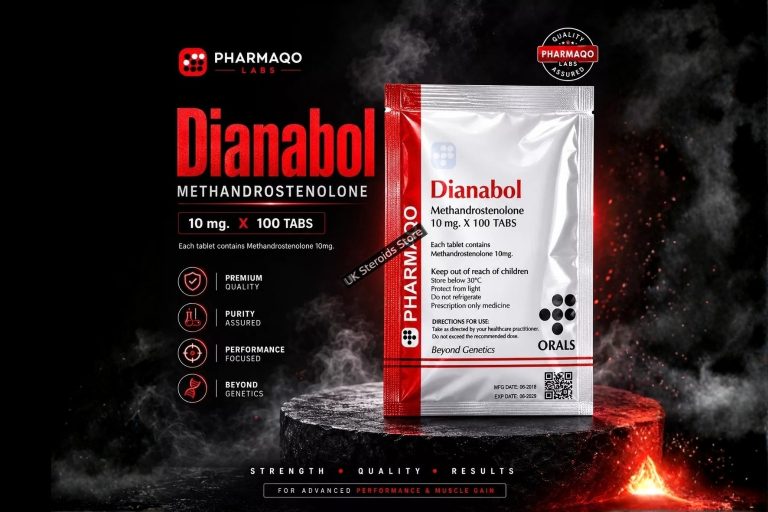
Dianabol is one of the longest-established names in discussions surrounding oral anabolic steroids. Also known as methandienone or methandrostenolone, the compound has remained closely associated with strength and muscular development for decades, giving it a particularly recognisable position within bodybuilding culture.
That familiarity, however, can sometimes make the subject appear simpler than it actually is.
A search for Dianabol can produce everything from scientific information and historical references to bodybuilding experiences, retailer descriptions and product reviews. These sources do not necessarily answer the same questions. Information about methandienone as a compound is different from information about a particular Dianabol product, while an individual’s experience cannot automatically establish what another person should expect.
This distinction is important when researching any oral anabolic steroid.
Understanding Dianabol as a compound, its oral formulation, the difference between compound identity and product identity, and the manufacturing considerations surrounding pharmaceutical-style products provides a much more useful foundation than focusing exclusively on performance claims.
Dianabol and Methandienone: Understanding the Name
Dianabol is commonly associated with methandienone, also known as methandrostenolone. The compound has a long history within performance-enhancement culture and has been discussed extensively in pharmacological and bodybuilding literature.
The name itself can therefore create some confusion. Dianabol is the familiar name used throughout much of the performance market, while methandienone describes the underlying compound.
That distinction becomes useful when researching products because a commercial product name does not replace the identity of the active compound.
The same principle applies across the wider oral steroid category. Two products may both be described as oral anabolic steroids while containing completely different compounds with different chemical structures, biological activity and risk profiles.
This is why categorising a product simply as an “oral steroid” tells only part of the story.
A more useful research process begins by identifying the actual compound before moving on to the formulation, manufacturer and individual product.
Why Oral Formulation Matters
Dianabol’s oral formulation is one of the defining features of the compound’s place within performance discussions.
Oral administration can make a product appear straightforward from a consumer perspective, but the route of administration is connected to the underlying chemistry of the compound. Methandienone belongs to the group of anabolic-androgenic steroids that were structurally modified to support oral bioavailability.
This also means that the term oral steroid should never be treated as a complete description of pharmacology.
Different oral anabolic steroids can have very different characteristics. Their molecular structures, metabolism, receptor activity and potential adverse effects can differ considerably even when they share the same route of administration.
That distinction matters because convenience of administration does not make one compound interchangeable with another.
It also means that comparing oral steroids purely by their reputation for strength or bodyweight changes leaves out much of the information required to understand them properly.
The Historical Reputation of Dianabol
Dianabol has maintained its reputation largely because of its long association with strength-focused training and muscular development.
The September UKSS discussion of Dianabol and strength development highlights an important point: strength itself is not produced by a single variable. Training experience, exercise technique, neurological adaptation, nutrition, recovery and muscle development all contribute to performance.
This is particularly relevant when looking at historical claims surrounding Dianabol.
Rapid changes in bodyweight can create an impression of dramatic muscular development, but bodyweight is not a direct measurement of new muscle tissue. Changes in water retention, glycogen storage and other factors can influence what appears on the scale.
That does not make the historical reputation of Dianabol irrelevant. It simply means the reputation needs to be interpreted within a wider physiological and training context.
The distinction between weight gain, muscle development and functional strength is therefore worth maintaining throughout any serious discussion of the compound.
Compound Research Is Different From Product Research
One of the most important distinctions when researching Dianabol is the difference between studying methandienone and studying a specific Dianabol product.
Scientific research can tell us about the characteristics and documented effects associated with methandienone.
It does not automatically establish the quality, authenticity or manufacturing standards of every product sold under a Dianabol name.
Product research asks a different set of questions.
Who is the manufacturer?
What active compound does the product state that it contains?
What formulation and strength are identified?
What information is provided about the product?
Is the product presentation consistent with the information being supplied?
These questions are particularly relevant in online markets, where products can be presented with highly professional branding while still leaving important questions about their origin, manufacturing and quality controls.
Separating compound research from product research helps prevent one of the most common mistakes in online steroid discussions: assuming that information about a chemical compound automatically proves the quality of a particular commercial product.

What Manufacturing Quality Actually Means
Manufacturing quality is broader than the appearance of a box, bottle or tablet.
The September UKSS article on pharmaceutical manufacturing explains that product consistency can depend on raw-material control, manufacturing processes, quality-control procedures, testing, packaging, storage and accurate labelling.
A consistent manufacturing process is intended to produce finished products according to defined specifications rather than relying on uncontrolled variation from one production run to another.
Laboratory testing can provide another layer of quality control. Depending on the product and manufacturing environment, testing may be used to confirm identity, assess purity or potency, or identify certain forms of contamination. But even the phrase “laboratory tested” needs to be interpreted carefully.
It does not explain by itself what was tested, which laboratory conducted the work, which methods were used or what the results actually demonstrated.
For that reason, meaningful documentation is considerably more useful than vague references to testing.
Packaging and Labelling Are Part of Product Research
Packaging is sometimes treated as little more than branding, but it has a practical role in pharmaceutical-style products.
Appropriate packaging can help protect a product from environmental exposure during storage and transportation, while labelling provides information that helps identify what a product is supposed to contain.
The manufacturing research completed for UKSS also makes an important distinction here: professional packaging can create an impression of quality, but appearance alone cannot establish manufacturing standards.
This is particularly relevant online.
A professionally presented product may look convincing, but presentation cannot independently establish the identity, purity or manufacturing history of what is inside.
Researchers should therefore consider packaging and labelling as parts of a wider information set, rather than treating them as proof of quality by themselves.
Pharmaqo Labs Dianabol 10mg × 100
For readers researching a specific Dianabol product, UK Steroids Store currently lists Pharmaqo Labs Dianabol 10mg × 100 within its Dianabol oral steroid category.
This provides a useful example of the distinction between a compound and an individual commercial product.
Methandienone is the compound being discussed in scientific and pharmacological terms.
Pharmaqo Labs Dianabol 10mg × 100 is a specific product listed by UKSS.
Readers looking for the current product information can view the Pharmaqo Labs Dianabol 10mg × 100 product page.
The purpose of making this distinction is not to turn a compound discussion into a product advertisement. It is to make the research process clearer.
The scientific literature and educational material explain the compound.
The product page explains the specific item being offered.
Those are two different information sources with different purposes.
Quality Claims Need Context
Online steroid markets contain a wide range of terminology designed to communicate quality.
Words such as premium, pharmaceutical, laboratory tested and pharma grade can sound authoritative, but terminology alone does not establish what a product actually is.
The UKSS manufacturing research specifically addresses this issue, noting that the phrase “pharma grade” should not automatically be interpreted as proof of a particular regulatory or manufacturing status. Researchers should consider the evidence supporting the claim rather than accepting the terminology at face value.
This is an important principle for anyone researching Dianabol products.
A product description can provide useful information.
A manufacturer can make claims about its production standards.
A retailer can present product details.
But the strength of each claim depends on the evidence available to support it.
That approach is more useful than assuming that sophisticated terminology automatically means independently verified quality.
Dianabol, Strength and the Limits of Anecdotal Evidence
Dianabol’s reputation is closely connected with strength development, but personal experiences should be separated from scientific evidence.
An individual may report significant changes in training performance or bodyweight after using a particular substance. That experience may be genuine, but it cannot establish that another person will experience the same result.
Training, diet, sleep, recovery, genetics and other variables can all influence performance.
The September Dianabol guest post makes this distinction clearly: a compound associated with rapid changes in bodyweight should not automatically be interpreted as producing proportional improvements in functional strength.
This is one reason performance claims should be treated carefully.
The more dramatic the claim, the more important it becomes to ask what evidence actually supports it.
Forums and personal reviews can provide insight into how a compound is perceived within a community, but they cannot replace controlled research or medical evidence.
Dianabol and the Wider Oral Steroid Category
Dianabol is part of a broader group of oral anabolic steroids, but that does not mean the compounds within the category are interchangeable.
Chemical structure, androgenic activity, anabolic activity, metabolism and potential adverse effects can all differ between compounds.
The convenience of oral administration can also create an inaccurate perception that oral anabolic steroids are somehow less significant from a health perspective than injectable alternatives.
They are not automatically safer simply because they are taken orally.
This is an important point when comparing categories.
An oral compound and an injectable compound may differ in formulation and route of administration, but both can have substantial pharmacological effects and potential risks.
Understanding those differences is more useful than organising compounds solely according to which one appears most effective in bodybuilding discussions.
Dianabol and Product Authenticity
Authenticity is another part of product research that deserves attention.
A product can have professional packaging and still require further evaluation. Similarly, online reviews can provide useful anecdotal information without independently establishing what a product contains.
The UKSS manufacturing research notes that counterfeit and mislabelled products can create uncertainty beyond the known characteristics of the active substance itself.
This is why product authenticity should be viewed as a broader verification issue.
Manufacturer information, product identification, labelling consistency, batch information, packaging and available quality documentation can all contribute to the overall picture.
None of these elements should automatically be treated as absolute proof on its own.
The more useful approach is to consider how the different pieces of information fit together.
The UK Context Around Anabolic Steroids
Researching Dianabol in the UK also means understanding that pharmacology and law are separate questions.
A compound can have a well documented scientific history while its legal status, possession, supply and purchasing circumstances are governed by separate legislation and regulatory considerations.
This distinction is worth making because online discussions frequently mix scientific claims with statements about what is legal or illegal.
Those are different questions.
The September UKSS guest post on anabolic steroids and UK law provides additional context for readers interested in the legal side of the subject rather than relying on assumptions made in bodybuilding communities.
The useful approach is to treat legal information as a separate research category and verify current requirements through appropriate UK sources.
Health Considerations Should Remain Part of the Discussion
A serious discussion of Dianabol cannot focus only on its historical performance reputation.
The September UKSS Dianabol research highlights that anabolic steroid misuse can be associated with cardiovascular, liver, kidney, hormonal and reproductive concerns.
Methandienone also belongs to the broader group of C17-alpha-alkylated anabolic-androgenic steroids discussed in medical literature in relation to hepatic effects.
This matters because the absence of an immediate symptom does not necessarily demonstrate that there is no physiological effect.
Health considerations are therefore part of understanding the compound itself, rather than an unrelated warning added to the end of an article.
This is another reason why online performance claims need to be viewed alongside medical and pharmacological information.
Why Product Research Should Go Beyond Reviews
Product reviews can be useful for understanding what individual customers report, but they have obvious limitations.
A positive review does not independently verify the contents of a product.
A negative review does not necessarily establish that an entire product range is defective.
Personal experiences are also difficult to compare because people have different expectations, backgrounds and circumstances.
The September manufacturing article makes the same broader point: online reviews should be treated as anecdotal information rather than a replacement for objective product documentation or appropriate quality verification.
This does not mean reviews have no value.
It means they should occupy the correct place within the research process.
A More Informed Way to Research Dianabol
A stronger approach to researching Dianabol starts with several separate questions.
First, what exactly is methandienone?
Second, what makes its oral formulation distinct?
Third, what does the scientific literature tell us about the compound?
Fourth, what is known about the specific commercial product being researched?
Finally, what evidence exists to support claims about manufacturing, quality and authenticity?
This approach prevents the common mistake of treating one source as though it can answer every question.
A scientific paper can provide information about pharmacology.
A medical reference can explain health considerations.
A manufacturing document can provide information about quality systems.
A retailer product page can provide current product information.
Each source contributes something different.
That is a much stronger research process than relying on a single product description or a collection of forum posts.
How Pharmaqo Dianabol Fits Into the UKSS Category
The Dianabol oral steroids category provides the broader product context for readers researching methandienone products through UKSS.
Within that category, the Pharmaqo Labs Dianabol 10mg × 100 product represents one specific commercial listing.
This category-to-product structure is useful because it separates the broader compound category from the details of an individual product.
It also makes it easier for readers to research the available product information rather than treating Dianabol as a single universal product.
For the wider market, UKSS also maintains its injectable steroids category, which provides a useful contrast between oral and injectable product categories.
The important point is not that one route is automatically preferable.
It is that route, formulation and compound identity are separate characteristics that should be understood before meaningful comparisons can be made.
The Bigger Picture Behind Dianabol
Dianabol has remained prominent in performance discussions for decades because of its historical association with strength and muscular development.
But its long reputation does not remove the need for careful research.
Methandienone is a specific compound with its own chemical and pharmacological characteristics. Its oral formulation places it within a particular group of anabolic-androgenic steroids, while the individual products sold under the Dianabol name introduce another layer of questions around manufacturer, formulation, quality and authenticity.
The September UKSS research into Dianabol and strength development provides useful context for understanding why the compound became so prominent, while the manufacturing research shows why the name of a compound alone cannot establish the quality of a particular product.
That distinction is ultimately what makes product research more useful.
The compound tells us what is being discussed.
The formulation tells us more about how the product is presented.
The manufacturer and product information tell us what is being sold.
The available evidence determines how confidently different claims can be interpreted.
Final Thoughts
Dianabol remains one of the most recognisable oral anabolic steroid names, but understanding it properly requires looking beyond its reputation for strength and muscular development.
Methandienone has a defined compound identity, a distinctive oral formulation and a long history within performance discussions. At the same time, the scientific and medical context surrounding anabolic steroids makes health considerations an essential part of responsible research.
The same principle applies at the product level.
A product name does not automatically establish manufacturing quality, and professional packaging does not independently verify what is inside. Product identity, labelling, manufacturer information, quality documentation and the evidence supporting specific claims all have a role in evaluating an online product.
For readers researching Dianabol through UKSS, the Dianabol oral steroids category provides the wider product context, while the Pharmaqo Labs Dianabol 10mg × 100 page provides information about a specific listed product.
The most useful approach is to keep the different layers separate: compound research, formulation research, product research and health research.
That produces a clearer and more informed understanding of Dianabol than focusing on performance claims alone.