uksteroidsstore.com is the only website we operate. Many try to imitate us. stay alert and dont get scammed look at our 5* Reviews.

Counterfeit Medicines and Pharmaceutical Quality: How Medicine Authenticity Is Evaluated
- Published On - November 15, 2026
- 12:14 PM

Pharmaceutical quality is an important part of modern healthcare. Medicines must meet established standards for identity, strength, purity and consistency before they can be considered suitable for their intended medical use. These requirements help ensure that patients and healthcare professionals can rely on the products being supplied.
However, counterfeit and falsified medicines remain a significant concern across international pharmaceutical markets. Products may contain incorrect ingredients, insufficient active substances, undeclared compounds or contaminants. In some cases, packaging may closely resemble that of legitimate pharmaceutical products, making visual identification difficult.
Understanding pharmaceutical quality therefore involves more than examining a product’s appearance or reading its label. Manufacturing controls, laboratory testing, supply-chain oversight and regulatory verification all contribute to determining whether a medicine meets appropriate quality standards.
This article explores how pharmaceutical authenticity is evaluated, why counterfeit medicines present risks and how quality assurance processes contribute to patient safety.
Understanding Pharmaceutical Quality Standards
Pharmaceutical quality refers to the ability of a medicine to meet defined specifications throughout its manufacturing, storage and distribution.
These specifications are designed to establish that a medicinal product contains the correct ingredients in the intended quantity and remains within acceptable quality limits.
Several important characteristics are considered during pharmaceutical quality assessment.
Identity confirms whether the substance present in a product is the ingredient declared by its manufacturer.
Strength determines whether the amount of active pharmaceutical ingredient corresponds with the approved product specification.
Purity assesses whether unwanted substances, impurities or contaminants are present.
Consistency evaluates whether different manufacturing batches maintain comparable quality characteristics.
Stability examines whether a medicine maintains its required properties under specified storage conditions and throughout its intended shelf life.
These characteristics work together to support pharmaceutical reliability. A product that meets one specification does not automatically satisfy every other quality requirement.
For example, a laboratory may confirm the presence of the expected active ingredient while identifying an unacceptable level of contamination. Pharmaceutical quality assessment must therefore consider multiple factors rather than relying on a single test.
How Pharmaceutical Manufacturing Quality Is Controlled
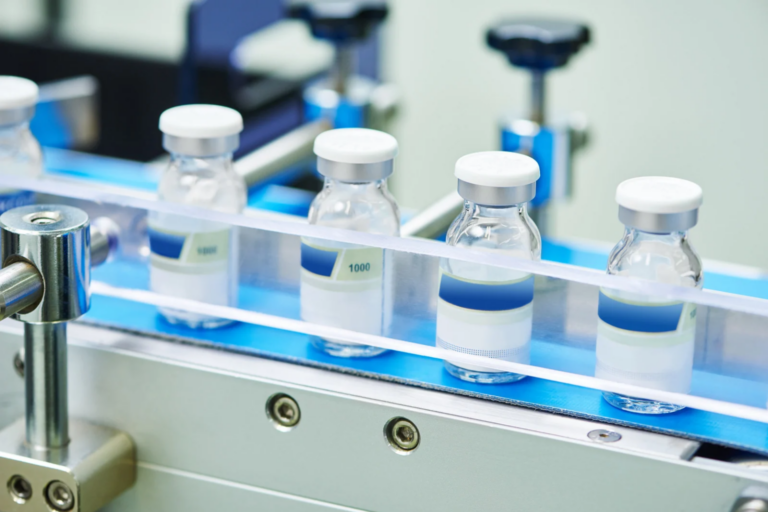
Pharmaceutical manufacturing involves a controlled sequence of processes intended to produce medicines that consistently meet established specifications.
Good Manufacturing Practice, commonly known as GMP, provides a framework for controlling these processes.
GMP requirements cover several areas, including manufacturing facilities, equipment, staff training, documentation, quality control and production procedures.
Manufacturers are expected to establish documented processes that reduce the possibility of errors and contamination.
Quality management systems also help ensure that manufacturing activities remain consistent. These systems can include equipment calibration, raw material assessment, production monitoring and formal investigation of unexpected results.
Batch documentation is another important element. Manufacturing records provide information about the materials, processes and quality checks associated with a particular production batch.
This documentation supports traceability and allows quality teams to investigate problems when unexpected results occur.
Pharmaceutical quality is therefore not established through final-product inspection alone. It depends on controls throughout the manufacturing process.
Counterfeit Medicines and the Challenges of Identification
Counterfeit or falsified medicines are products that deliberately misrepresent their identity, composition or source.
They may be presented as genuine pharmaceutical products despite having an unauthorised or misleading origin.
Some falsified products contain no active ingredient. Others may contain incorrect substances, inappropriate concentrations or potentially harmful contaminants.
One of the main challenges is that counterfeit products can imitate legitimate packaging.
Labels, batch numbers, product descriptions and external presentation may appear convincing. However, these details do not independently establish the authenticity of the medicine inside the packaging.
This is why pharmaceutical verification requires more than visual inspection.
Regulatory oversight, authorised supply-chain controls, manufacturer documentation and appropriate laboratory analysis all contribute to the assessment.
Counterfeit medicines can also enter distribution networks through unauthorised suppliers and poorly controlled channels. Supply-chain security is therefore an important component of pharmaceutical safety.
Pharmaceutical Testing and Laboratory Verification
Laboratory testing is one of the principal methods used to evaluate the composition and quality of pharmaceutical products.
Different analytical techniques are selected according to the substance being examined and the purpose of the investigation.
Chromatography is widely used in pharmaceutical analysis. Techniques such as high-performance liquid chromatography can help separate individual components within a sample.
This allows analysts to examine the presence and quantity of specific substances.
Mass spectrometry is another important analytical technique. It measures the mass-to-charge ratios of ions and can provide information that helps identify chemical compounds.
Spectroscopic techniques can also support pharmaceutical analysis by examining how substances interact with different forms of electromagnetic radiation.
Each technique has its own capabilities and limitations. A suitable testing programme may therefore involve several analytical methods rather than relying on one measurement.
Laboratory results must also be interpreted against appropriate reference standards and validated analytical procedures.
A test result is only as reliable as the method, equipment, reference material and sample handling procedures used to produce it.
Understanding Pharmaceutical Formulations and Ingredient Consistency
A pharmaceutical formulation contains more than an active pharmaceutical ingredient.
Medicines may also include excipients, which are substances used to support stability, manufacturing, delivery or other formulation characteristics.
Examples include binders, fillers, preservatives, coatings and stabilising agents.
The selection of these ingredients depends on the type of medicine and its intended pharmaceutical properties.
Formulation development involves evaluating how different ingredients interact and whether the finished product maintains its required characteristics.
Changes in raw materials, manufacturing equipment or production procedures can affect the final formulation.
This makes ingredient consistency an important part of pharmaceutical quality management.
For further background on the subject, see Steroid Product Research: Formulations, Evidence and Quality.
Understanding formulation science helps explain why the presence of an active ingredient alone is not sufficient to establish the overall quality of a finished pharmaceutical product.

Batch Testing, Traceability and Documentation
Pharmaceutical production is organised around controlled manufacturing batches.
A batch represents a defined quantity of product manufactured under specified conditions.
Batch testing helps determine whether a particular production quantity meets the relevant quality specifications.
Depending on the medicine, testing may examine identity, strength, purity, dissolution, stability and microbiological characteristics.
Documentation connects these results with the manufacturing history of the product.
Batch records may include information about raw materials, production stages, equipment, quality-control results and release decisions.
Traceability is especially important when a quality problem is identified.
If a manufacturing defect or contamination issue is discovered, traceability information can help determine which products and distribution channels may be affected.
This information also supports investigations, product recalls and regulatory reporting.
Without reliable documentation, identifying the origin and distribution of a pharmaceutical quality problem becomes considerably more difficult.
Pharmaceutical Storage and Stability
Pharmaceutical quality does not end when manufacturing is completed.
Medicines may be affected by environmental conditions during storage and distribution. Temperature, humidity, light exposure and packaging integrity can all influence product stability.
Stability testing evaluates how a pharmaceutical product changes under defined environmental conditions over time.
These studies help establish appropriate storage requirements and support the determination of shelf life.
Packaging also plays an important role. It may protect a medicine from moisture, light, physical damage or contamination.
Temperature-controlled distribution systems may be necessary for products that require specific storage conditions.
If a medicine is stored outside its specified conditions, its quality may be affected even when it was manufactured correctly.
This demonstrates why pharmaceutical quality assurance must extend throughout the supply chain.
Regulatory Oversight and Pharmaceutical Verification
Regulatory authorities establish requirements for the development, manufacture, distribution and monitoring of medicinal products.
Their responsibilities can include inspecting manufacturing facilities, evaluating product documentation, assessing safety information and investigating suspected quality violations.
Regulatory oversight also supports the identification of falsified or unauthorised medicines.
In the United Kingdom, the Medicines and Healthcare products Regulatory Agency plays an important role in medicines regulation and the protection of public health.
Regulatory systems may use licensing requirements, manufacturing inspections, reporting procedures and product alerts to support medicine safety.
Pharmaceutical supply-chain controls are another important part of this framework.
A legitimate supply chain provides greater accountability because manufacturers, wholesalers and other authorised participants operate within defined regulatory requirements.
However, no individual verification detail should be treated as an absolute guarantee of product authenticity. Reliable assessment depends on the wider regulatory and quality-control framework.
The Importance of Pharmaceutical Research and Evidence
Pharmaceutical research contributes to the development of quality standards and improved analytical methods.
Researchers investigate how active substances behave, how formulations maintain stability and how manufacturing conditions influence product characteristics.
Evidence-based assessment is important because pharmaceutical claims should be supported by reliable testing and documented findings.
The distinction between laboratory observations, animal research and human clinical evidence must also be maintained.
These research categories answer different questions and cannot automatically be treated as equivalent.
For broader background on the research context, see Anabolic Steroids: Long-Term Performance Research.
Scientific evidence helps explain the properties and limitations of pharmaceutical substances, but it does not replace regulatory approval or individual medical assessment.

Why Pharmaceutical Quality Matters for Patient Safety
Pharmaceutical quality is directly connected to patient safety.
A medicine that contains an incorrect ingredient, an unsuitable concentration or harmful contaminants may create unexpected health risks.
Inconsistent manufacturing can also affect the reliability of treatment.
This is why pharmaceutical quality assurance considers the complete product lifecycle, from raw material selection to manufacturing, testing, storage and distribution.
Patients should obtain prescribed medicines through legitimate, regulated healthcare and pharmacy channels.
Questions about a medicine’s authenticity, quality or suitability should be discussed with a qualified healthcare professional or pharmacist.
Unexpected reactions or suspected problems with a medicine should be reported through appropriate healthcare and regulatory channels.
Quality assurance cannot remove every possible risk associated with medication, but it provides an essential framework for identifying and controlling preventable problems.
Conclusion
Pharmaceutical authenticity and quality depend on several interconnected processes. Manufacturing standards, laboratory testing, batch documentation, stability assessment and regulatory oversight all contribute to determining whether a medicine meets established requirements.
Counterfeit and falsified medicines remain a concern because external packaging and product descriptions cannot independently establish the composition or origin of a pharmaceutical product.
Reliable quality assessment therefore requires documented manufacturing controls, appropriate analytical methods and traceable supply chains.
As pharmaceutical research and analytical technology continue to develop, quality assurance systems remain essential to maintaining confidence in medicinal products.
Ultimately, pharmaceutical quality is not simply a matter of appearance or labelling. It is a measurable and documented process that supports medicine reliability, regulatory compliance and patient safety.